
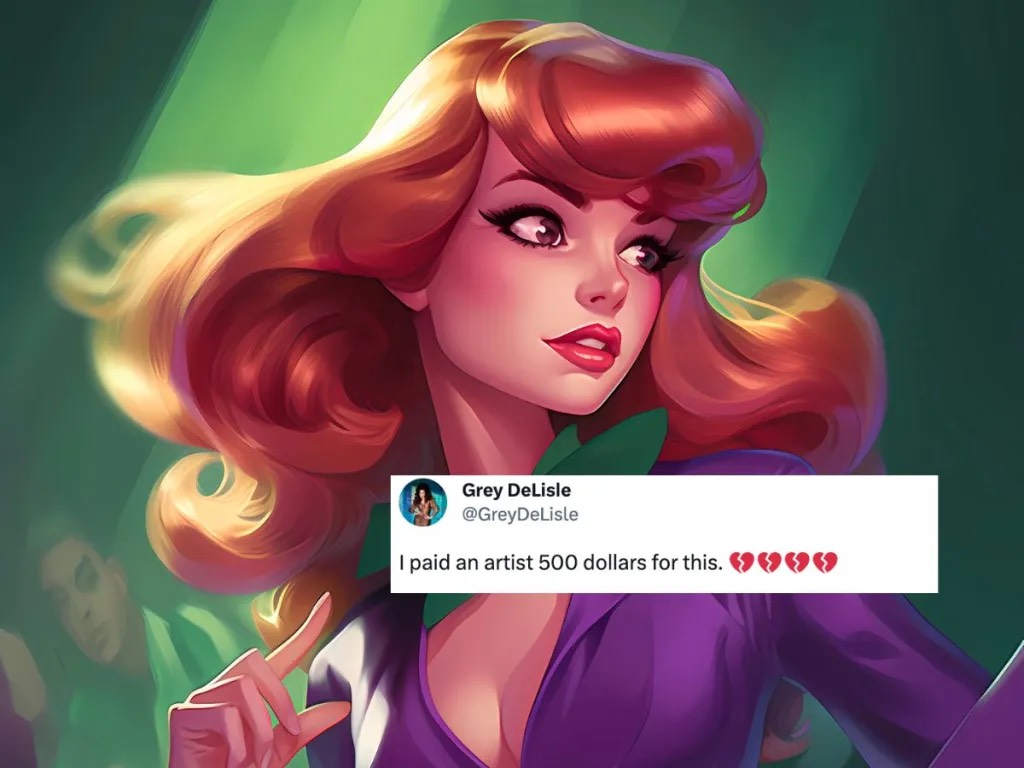
Ever heard of AI generated art? It’s very beautiful, right? Though it may seem like a marvel to understand how AI can create beautiful pieces, it isn’t really much of a wonder, especially to those on the negative-receiving end of the AI art. On January 13th 2023, Artetra AI Corporation launched their new art AI engine worldwide, possibly changing the art scene forever. Their new AI will allow anyone to type a couple words into their search engine, and suddenly, out pops a beautiful art piece! However, the story behind AI art isn’t as beautiful as what it produces. To learn all the skills and different styles an art engine can produce, it needs existing art to study.
Here is the crux of the matter: almost all the art AI uses to learn is stolen from non-consenting artists. There is speculation about AI art lowering the value of art and artists in society, in addition to the artists and consumers being exploited by the AI art. AI art is a great tool for artists. It is a great tool to develop concept designs. It is also much cheaper and faster to use, compared to hiring artists to spend hours on designs, when you could easily type a couple words in and spew out thousands of possible designs. This is just another product of technological advancement, and it would be unreasonable to say that there is no benefit to it. Despite all these positive impacts, the negative impacts are just as important to consider.
Unfortunately, nowadays people are using AI art and claiming it as their own. It is becoming more and more common to see people using AI art when commissioned, and entirely claiming it as their own. With AI art seeming more and more realistic, it is getting harder and harder to prove the origin of an art piece. Sometimes, asking for a sketch as proof isn’t enough, and not all artists have software that records their painting process.
Now, it isn’t just artists who are being affected. Someone may have paid a large sum for a piece of art, just for the art to have been quickly typed up and generated. Emma Wagnes, a YA writer, commissioned someone to create some concept art for her new book cover. She soon found out that the art was purely generated by AI, after she paid so much for the piece. “I felt really really betrayed. I had looked through the person’s portfolio and deemed them a good fit to make the cover of my newest book. After meeting up with one of my friends later, she told me this art all looked AI generated. When I asked the artist for the sketches, timelapse, or proof of layers, they blocked me.” After checking with others, the art was fully proven as AI-generated. There are more and more situations like these happening all around. AI art is now not only exploiting artists, but everyday people in need of art.
As previously mentioned, AI art steals art to study from. Like any AI, art AI needs lots of training to produce the best results. So where does this one get its training? As seen on Artetra’s official website, their new AI art engine has studied over 10 million different pieces of art. Now, did Artetera commission 10 million different art pieces for their art to learn from? Probably not. Unless every artist of all these 10 million pieces of art allowed for their art to be taken and analyzed, so the AI can learn from it and replicate the style, this is art theft. The AI is taking and using the art, which is used for commercial gain by the company that made it. That sounds a lot like art theft.
Art Youtuber Per0niliy, also known as Louis Cardy, did a deep dive into everything known about Artetra’s art engine. Cardy found that the AI engine examined images from all across Twitter, Deviantart, and Instagram to learn from. Cardy explains, “Well it was always known that anyone can access publicly shown art. This never meant we wanted it to be used and analyzed without the permission of the artist. The goal was to show our art to our audiences, so they could enjoy it like we do”. Later in the video, Cardy expressed a desire for different image sharing platforms to adopt security measures to their images, or implement a consent system where artists could give their permission for their art to be analyzed. Though nothing else has been said about this further, possibly with improving technology, a system like this could be implemented.
AI art is beginning to worry artists, they believe that the value of art and artists in society is decreasing. Now since it is so easy to create pretty art pieces, artists are seeing a bleaker and bleaker future for art as a career. AI art is cheap and fast, and is improving by the day. So then, why would an artist pursue an art career? Spending years on perfecting art or paying so much for art school, when art can now be easily made and edited to one’s liking in a matter of seconds. Art will always be important in life. It is doubtful that AI art can ever really replace art created by humans. However, art is being led in the direction of being something easily obtained, and valued to less and less.
Popular art creator MilliiDraw, who has over 2 million followers on Twitter (now X) recently put out a video on AI art engines, and how some smaller AI engines are being trained on her art alone and are made to replicate her art style. The artist did not consent to any of her art being used for this, and is expressing a lot of anger towards this situation and the unfair use of her art. She expresses concern that now, for not just her but all artists, that fewer and fewer people would be willing to pay for authentic art in any specific style. She worries for herself and others that their future careers will be affected. Still, human-made art holds more value according to a study released by Styo Corporation. It detailed that people felt a closer connection with art made by someone’s hand, rather than those of an AI. At least for now, human-made art retains its financial and artistic value.
Though we see that AI art can be beneficial, there are many downsides to the tool. AI is being used to exploit artists and those seeking art alike. It engages in art theft while analysing artworks to study from, and also may lead to the devaluing of art in the future. The use and training of AI art today must be reconsidered to be used more ethically, and not to the detriment of any parties involved with the art industry. Recently, this topic has been trending all over social media. Hashtags such as #SaynotoAIart as well as #myartmyproperty and #MyartnotAIarta reflect the sentiments of so many artists all around.
“If art has nothing to do with people’s pain and sorrow, what is ‘art’ for?” – Ai WeiWei.
 THE NORTH STAR