
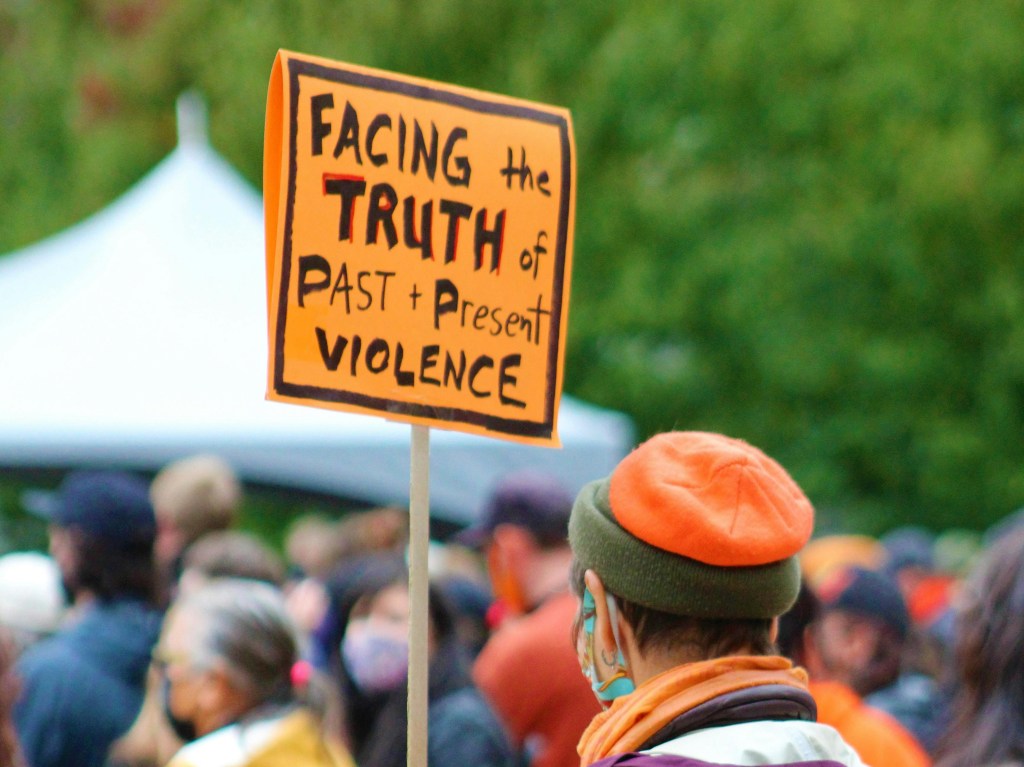
Every year on September 30, students all across Canada wear orange shirts. The sea of orange rushes through hallways and separates into pools as students make their way into classrooms. But what is the significance of an orange shirt?
To Phyllis Webstad, the founder of Orange Shirt Day (also known as National Day for Truth and Reconciliation), an orange shirt is more than an item of clothing. When she was only six years old, Webstad had to attend residential school. For her first day, her grandmother bought her a brand new orange shirt, which made her even more keen for her first day of school. But when she attended the school, they stripped her orange shirt from her, and she never saw it again. She remembers how she, and many other kids, were crying, but no one seemed to care about them.
Her experience was faced by many others who attended residential schools and were forced into assimilation. By wearing an orange shirt on September 30th, we recognize the dark past of residential schools and commit to the everlasting truth that every child matters.
However, for those who have experienced actually going to a residential school, truth and reconciliation is more than just a one day thing. There is more that we can do to help year-round.
For example, buying orange shirts from Indigenous creators makes sure that the money is going directly to the cause of supporting Indigenous peoples. During any time of year, we can purchase items from small businesses. It’s always good to try new things – especially food from other cultures – you never know what you might end up liking!
The Canadian government creating the National Day of Truth and Reconciliation a federal holiday is great, but there is more direct action that can be done to actually work towards this initiative. The government can create better infrastructure that allows those who live on reserves to have access to clean drinking water like we do. Actually, not having clean water on reserves can be seen as an infringement of basic human rights; and after all of the harm that has been caused, the least the government can do for them is give them access to clean water. Other issues can be addressed as well, such as the safety of Indigenous women, girls, and Two-Spirit peoples.
So, it is encouraged to wear an orange shirt, but it is also important to remember that the truth and reconciliation initiative doesn’t stop when we take off our shirts at the end of the day.




 THE NORTH STAR