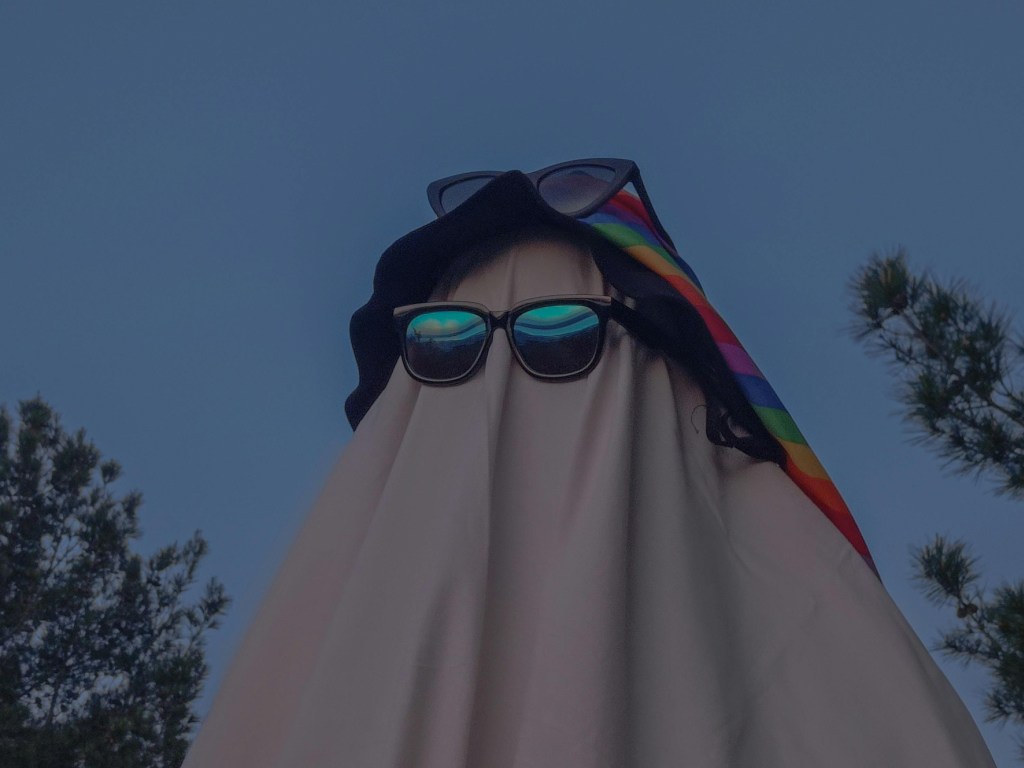
Gather round, boos and ghouls! For an event based around being scary, Halloween holds a uniquely welcoming spot amongst most holidays. Originally conceived as a Celtic festival, Halloween as a celebration has far outgrown its origins. This lies in stark contrast to most other large holidays, which still cling onto their religious roots. This puts the celebration of Halloween in a very unique position, where it has been welcoming to many, especially those in the Queer community.
It also, curiously, exists contrary to most holidays aesthetically. The celebration of Halloween values the frightening, the disgusting and, especially, the expressive. The main act of Halloween is dressing up as something, and to choose any sort of costume is to choose a way of expressing oneself, and with the emphasis placed onto these attributes, has come together in a way to be extremely welcoming.
Because of this, Halloween has gained the attraction of many in the Queer community. Historically, Queer people have been heavily ostracized from the public view. On one hand, there have always been niche spaces for Queer expression to exist. However, there has always remained a heavy bias towards non-LGBTQIA+ people for mainstream media. There is a long history of LGBTQIA+ celebrities being gatekept or having their sexuality/gender identity minimized when entering the public eye.
Which is why Halloween is so valuable to the Queer community. The holiday is a complete and utter endorsement of the eccentricities which have come to define the Queer community. Because for one night, Queer people’s expression no longer is niche, it is normal, and it is celebrated. Because when given the choice of what mask to wear, it allows us to show our true faces, because we should want to let the monster out of the closet.
 THE NORTH STAR