
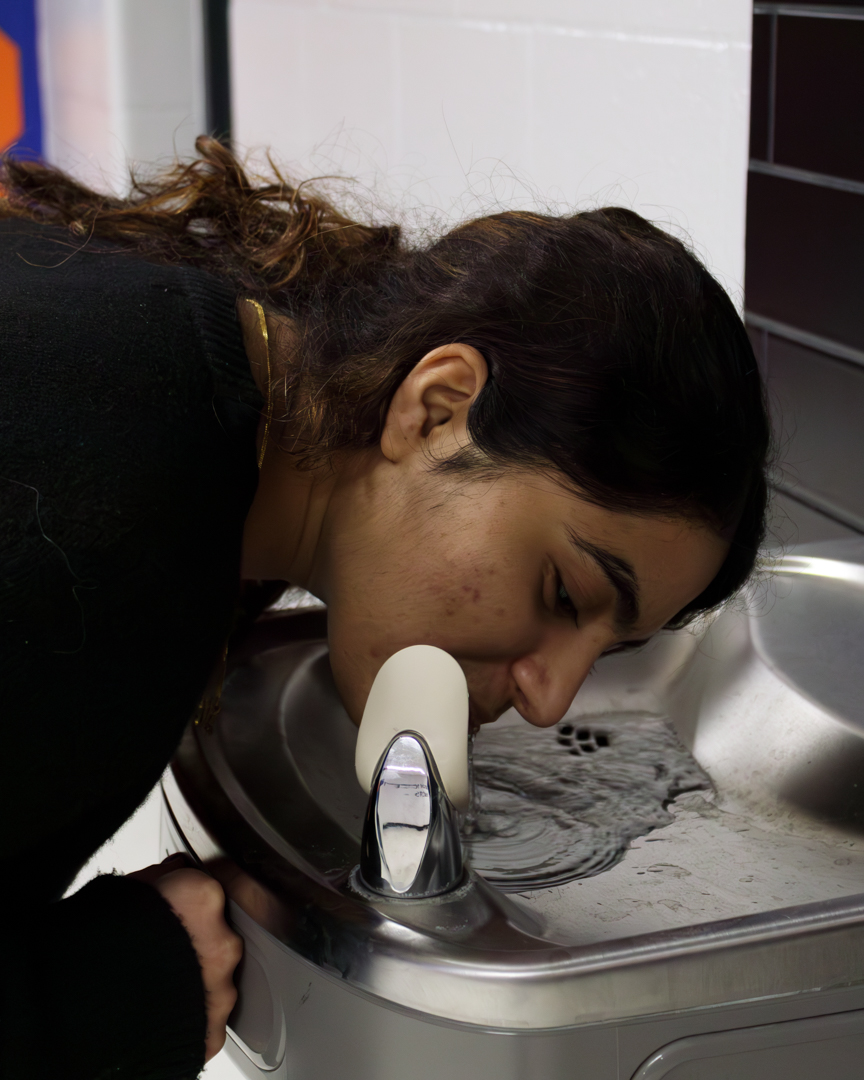
On the evening of October 3rd, a letter went out to parents/guardians of North Park students informing them that “an exceedance of lead was found in at least one of our drinking water/food preparation sources,” and that, “all exceedances at our school have been resolved.” The vagueness of the letter raised concerns with students about the drinking water here at North Park. However this exceedance was found during a test before students were in the building, and was resolved before students ever entered the building.
An exact time of the testing which found the lead was not provided by the time of publishing. However, the school administration claims that there was no lead exceedance during school hours and proper measures have been taken to resolve the exceedance.
North Park was built in 1978 and is one of oldest schools in Brampton. Because of this, the pipes in the school do contain trace amounts of lead. Each morning, two tests are taken for lead, a pre-flush test and a post-flush test. The pre-flush test consists of collecting two one-litre samples. Once they have been collected, the pipe system is flushed by running each tap for five minutes. After the flushing is finished, the pipes must sit for thirty minutes and then another sample is collected. The lead was found in a pre-flush sample. After the flushing, the lead was no longer above ministry standards.
So why didn’t the letter to the families just say so? As Ms.Grindley put it, “as with all larger organizations is, because it’s being sent out to so many different sites, they have a template that covers the immediate safety basics and share that. And within that document are links, the one that was shared didn’t accurately work.”
The water meets the Ontario guidelines. However, the building is old and so are the pipes. The water fountains have capacity for filters and yet the water fountains lack filters. However, even without filters, the water is tested daily and is always up to Ontario code. Ms. Grindley said, “The water here is safe. It is up to code. They do their testing at specified intervals to ensure the water level is safe. If any of those tests come back at a level that is unsafe then we go into the next steps to rectify that … They have testing implementations to ensure that it is safe.”
Image Credits: Simar G.




 THE NORTH STAR